

Summary
Your first run should be treated like a controlled validation step, not like a full rollout. The goal is not only to press launch. The goal is to learn whether your campaign, agents, data, and delivery setup behave the way you expect in real operating conditions.Who this is for
New users setting up TruAgents for the first time.Before you launch
- confirm contacts are mapped correctly
- confirm the campaign is narrow and intentional
- confirm channel setup is ready
- confirm someone knows where to review drafts, runs, and communications after launch
What to watch after launch
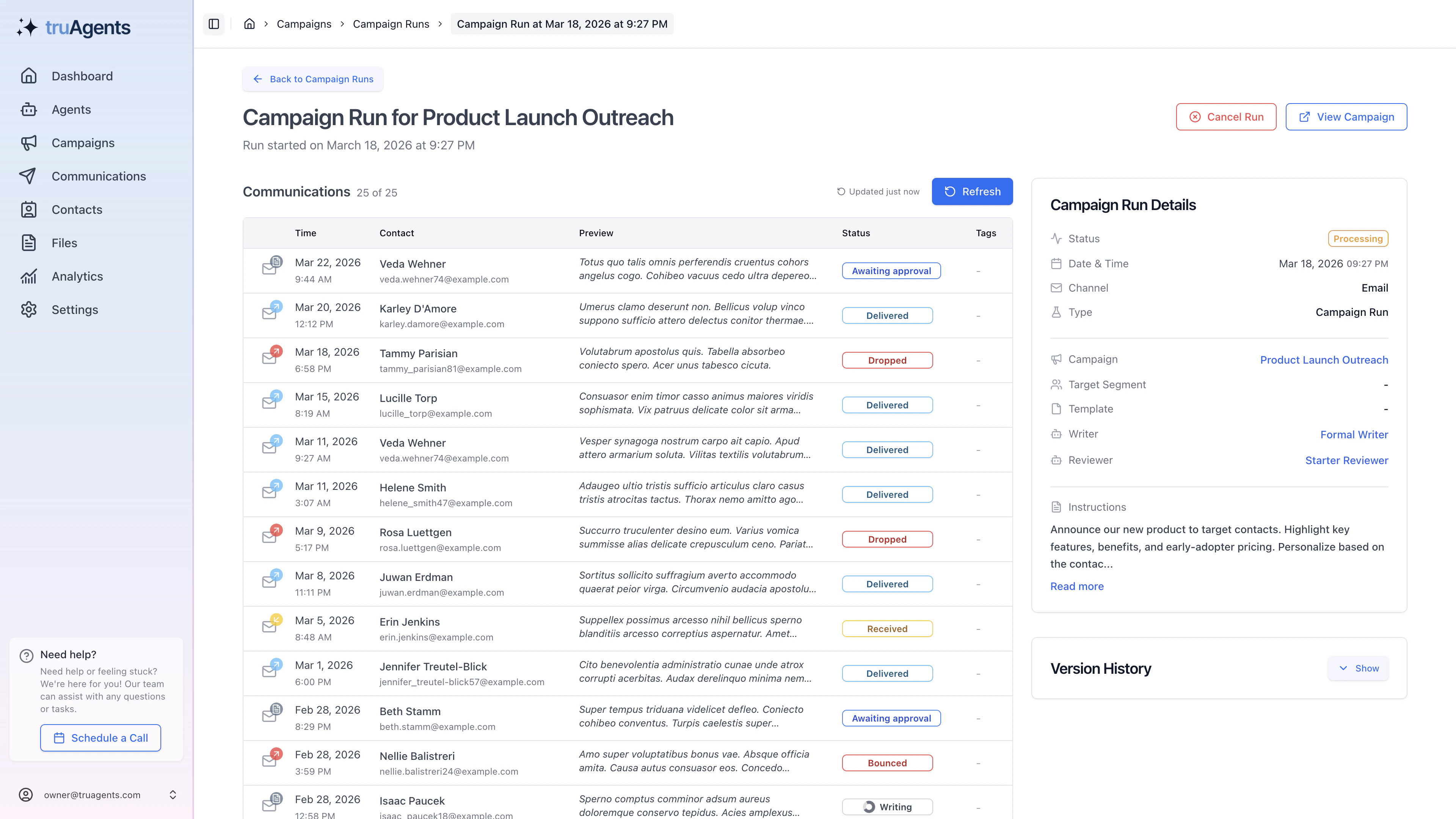
Campaign run level
Use the run detail to inspect:- run status
- run type
- generated communications
- replies and follow-up activity
Draft level
If approvals are involved, confirm drafts are not stuck waiting on content, review, or missing infrastructure.Communication level
Use Communications and communication detail pages to see what was actually sent, how it fits into thread context, and whether anything looks surprising.First-run review sequence
- Check whether the run started in the way you expected.
- Inspect run status and generated communications.
- Review whether any drafts are waiting, failing, or blocked.
- Open at least one real communication detail page.
- Decide what to change before the next launch.
Example: what counts as a useful first run
A useful first run does not need to be perfect. It needs to teach the team something concrete, such as:- the audience selection is correct
- the instructions produce the expected style
- approvals are too strict or too loose
- channel setup is more or less ready than the team thought
If the first run looks wrong
Start with the narrowest explanation first:- was the audience wrong?
- was the campaign setup wrong?
- was the agent behavior wrong?
- was the delivery setup wrong?
Recommended first-run mindset
- start small
- review closely
- fix obvious setup issues before expanding
- learn from one run before trying to optimize ten things at once
Success checklist
- The run completed or failed in a way the team can explain.
- Drafts and communications looked directionally correct.
- The team knows where to look next if something is wrong.
- The next launch will be based on what was learned, not blind confidence.