

Summary
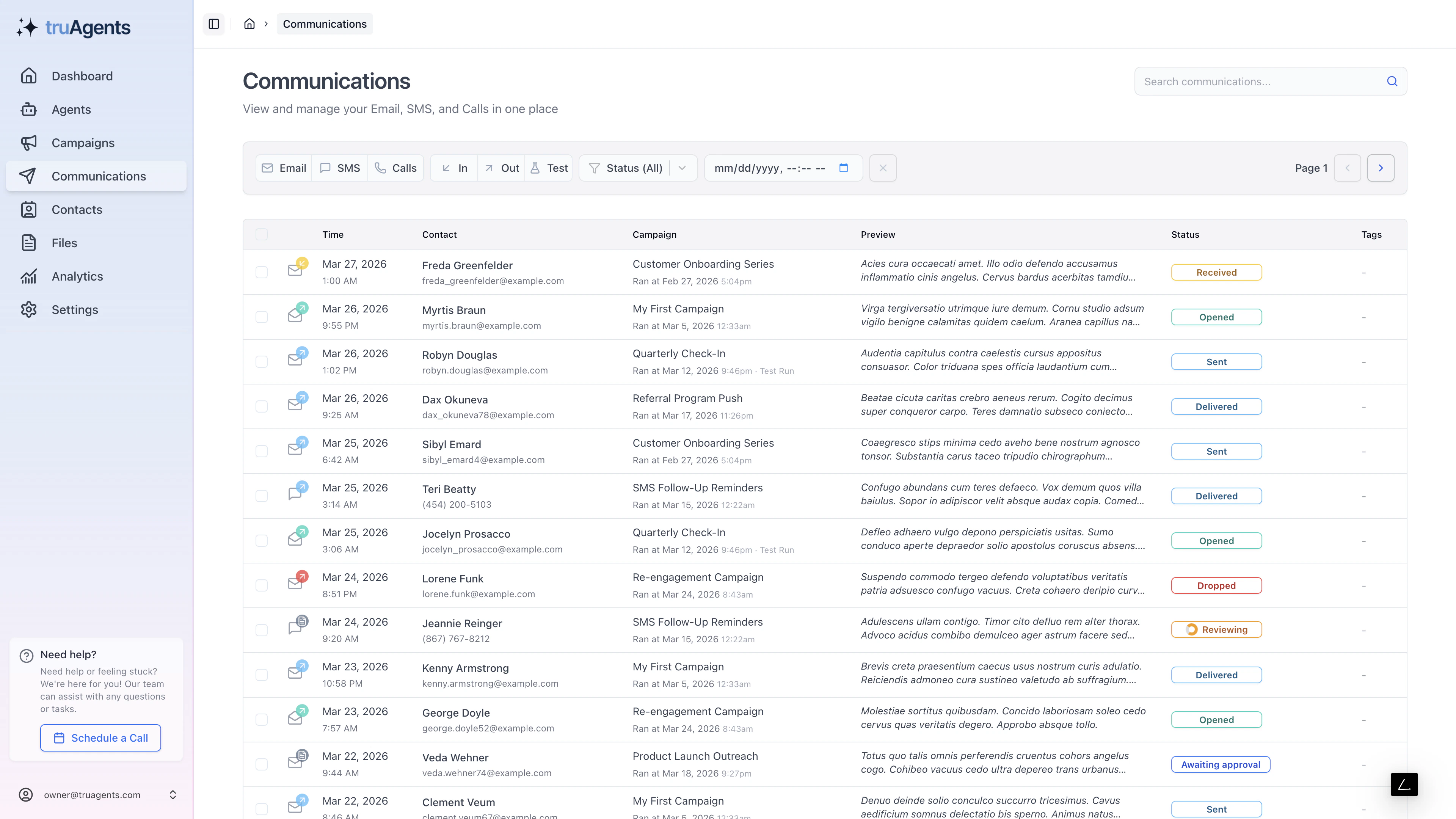
TruAgents is built around the idea that customer outreach should be managed as connected communication history, not as disconnected one-off messages. That is why Communications matters so much in the product. It is not just a list of sent items. It is the place where channel activity, thread context, campaigns, drafts, replies, and contact history meet.Who this is for
- Anyone learning the operating model of the product
- Operators working in Communications every day
- Campaign managers trying to understand how messages connect over time
Where to find it in the app
- Communications
- communication detail pages
- contact history views
- campaign run detail views
Core idea
The right mental model is:- a communication is an event
- a thread is the surrounding context
- the operating decision should usually be made with the thread in mind, not only the single event
Why thread context matters
If you only look at a single message row, you may miss:- whether this was part of a broader campaign
- whether it already has replies
- whether a draft or approval history shaped the outcome
- whether the contact has meaningful prior context
- whether the latest event is actually the problem or only the visible symptom
Why this matters in TruAgents
The app structure strongly suggests that a communication can be linked to:- a contact
- a campaign or run
- draft history
- replies
- status events
- tags
Communication types you should keep separate mentally
A draft is not yet a communication
Drafts belong to preparation and review. They matter because they shape communications, but they are not the same thing as a sent or received event.A reply is not just another outbound item
Replies change the state of a conversation. In the campaign model, some reply handling also behaves differently from net-new outbound work.A thread is not just a UI grouping
Threading is operationally useful because it keeps the human and campaign context together when your team decides what to do next.What good communications review looks like
- start with the thread, not just the latest row
- check whether a campaign or run is involved
- review tags and prior replies before making a decision
- separate drafting mistakes from delivery or response-state issues
- use contact context when deciding what the next message should be
Common operator mistakes
- treating every row as a standalone message
- debugging the latest communication without checking the thread
- mixing up drafts, sent items, and replies
- assuming a channel-specific view tells the whole story
Plain-English example
If a message looks wrong, do not immediately ask, “Why did TruAgents send this?” Ask:- what campaign or run created it
- what the earlier thread already contained
- whether there were replies or approvals that changed the path
- whether the contact context made this message reasonable or obviously wrong
Common misunderstandings to avoid
- A communication row is not the whole story.
- A sent message and its later replies should not be reasoned about in isolation.
- Channel-specific behavior still belongs to one broader communications model.